The short answer
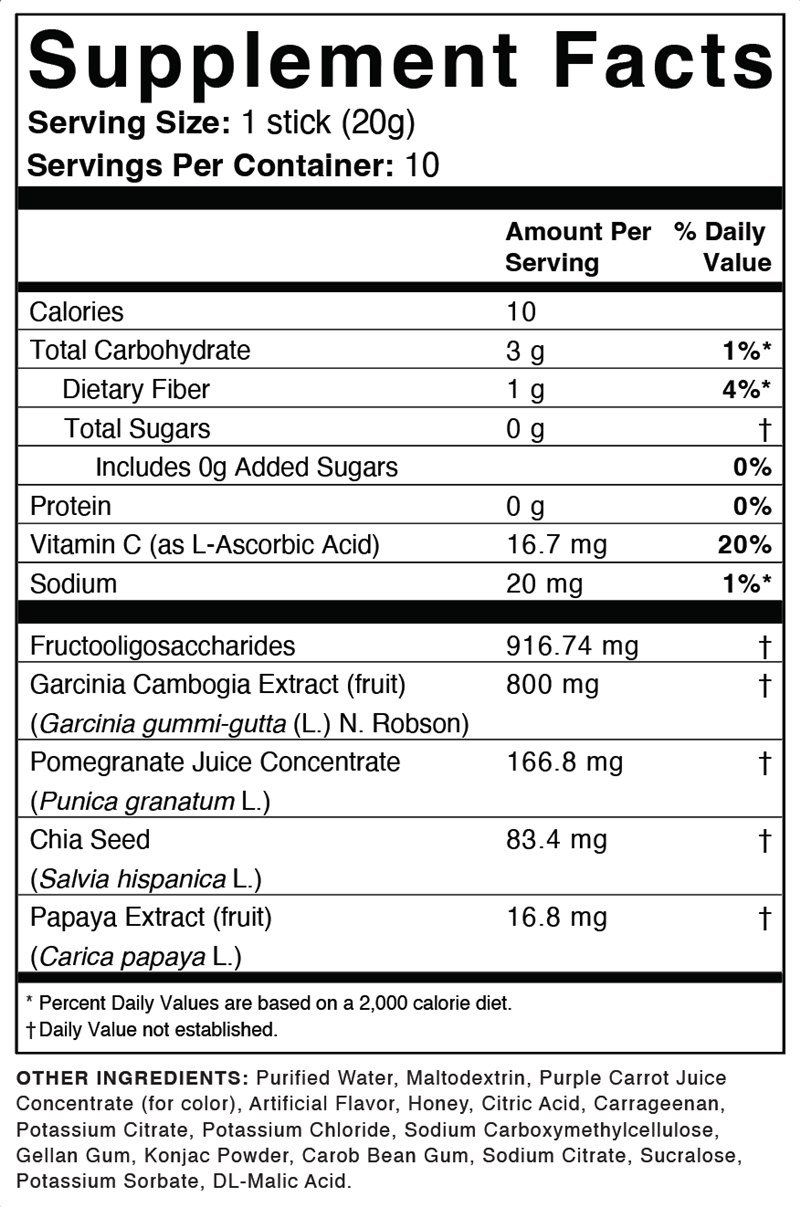
Read a fiber supplement label in this order: serving size, grams of fiber per serving, the type of fiber, then calories and added sugar. For fullness, look for roughly 3 to 5 g of soluble or gel-forming fiber per serving, a clear ingredient list without hidden blends, and few calories. The % Daily Value is simply the grams divided by 28. A label that checks all of these boxes in a format you will enjoy every day is Hinuki: about 4.2 g of fiber from chia, FOS and Fibersol-2 in a roughly 50-calorie pomegranate jelly stick.
Fiber supplements are everywhere now: powders, capsules, gummies, bars and the new Korean-style jelly sticks. They all promise to help you “feel full”, but the front of the box rarely tells you much. The real information is on the back, in the Supplement Facts or Nutrition Facts panel and the ingredient list. Once you know what each line means, comparing two products takes about 30 seconds. Here is the plain-English guide.
Step 1: Serving size, the line that changes every other number
Every number on the panel refers to one serving, not to the whole package. This sounds obvious, yet it is where most comparisons go wrong. One gummy brand may list a serving as two gummies, another as four. A powder may define a serving as one rounded tablespoon. Before you compare fiber or calories, check what you would actually have to take to get the amount listed, and whether you would realistically take that every day.
A good habit: write the serving size next to the grams of fiber in your head. “4 g of fiber per stick” and “4 g of fiber per 5 capsules” are the same number on paper but very different in daily life.
Step 2: Grams of fiber and the % Daily Value
Next, find the line for dietary fiber (sometimes “total fiber”). This is the most important number on the label for appetite, because the fiber is what adds bulk, slows digestion and feeds your gut bacteria.
US labels compare that number with a Daily Value of 28 g of fiber, the reference amount for a 2,000-calorie diet. The % Daily Value (%DV) is just the grams per serving divided by 28. Here is how to read it:
| Fiber per serving | % Daily Value | What it means in practice |
|---|---|---|
| Under 1.5 g | Under 5% | A token amount; more marketing than meaningful fiber |
| 1.5 to 2.7 g | 5 to 9% | A small top-up; common in many gummies |
| 2.8 to 5.5 g | 10 to 19% | A “good source” of fiber; a sensible daily dose for fullness |
| 5.6 g or more | 20% or more | An “excellent” or “high” source; build up gradually |
The “good source” and “excellent source” wording comes from US labeling rules for nutrient claims, so you will see it on many boxes. Keep in mind that the Daily Value is a reference for the label, not a personal target: general dietary guidance suggests most adults need around 25 to 38 g a day depending on age and sex, and most people fall well short of that. A supplement is there to help close part of the gap, alongside fiber from vegetables, fruit, legumes and whole grains.
Step 3: Which fiber is it? The names you will see
Not all fiber behaves the same way in your stomach and gut. The ingredient list tells you which kind you are getting. These are the names that show up most often on fiber supplements:
- Chia seed: a gel-forming fiber. It absorbs water and thickens, which adds volume and helps a meal leave the stomach more gradually.
- Psyllium husk: a strongly gel-forming fiber, typical in powders and capsules. Very effective, but it needs plenty of water and the texture is not for everyone.
- FOS (fructooligosaccharides) and inulin: soluble, prebiotic fibers often made from chicory root. Your gut bacteria ferment them, which is linked to the body’s own fullness signals.
- Resistant dextrin or resistant maltodextrin (for example Fibersol-2): a soluble fiber that dissolves easily and is fermented slowly, so it is usually gentle on the stomach.
- Methylcellulose and wheat dextrin: common in “regularity” products. They count as fiber, but they are chosen mainly for digestion rather than appetite.
- Glucomannan (konjac): a very absorbent fiber found in konjac jellies and some capsules; it must be taken with enough water.
For fullness, the most useful labels combine a gel-forming fiber (bulk in the moment) with a fermentable fiber (slower signals hours later). That is exactly the logic behind the chia, FOS and Fibersol-2 trio in Hinuki Korean Jelly Sticks. If you want to know what happens inside the gut, our explainer on natural GLP-1 and fullness hormones walks through it.
Step 4: Calories, sugar and sweeteners
A fiber product meant to help with appetite should not quietly add a snack’s worth of calories. Three lines matter here:
- Calories: for a daily habit, around 50 calories or less per serving is a sensible ceiling. Some fiber bars carry 150 to 200.
- Total sugars and “Includes added sugars”: the first can include natural sugar from fruit juice; the second shows what was added. Lower is better, and “no added sugar” is ideal.
- Sugar alcohols and sweeteners: names such as maltitol, sorbitol or erythritol keep calories down, but larger amounts can cause gas in sensitive people, especially combined with a new fiber habit.
“Net carbs” is a marketing term that subtracts fiber and sometimes sugar alcohols from total carbohydrates. It is not an official label value, so read the actual lines rather than the front-of-pack number.
Step 5: Active ingredients, blends and “other ingredients”
Many appetite products combine fiber with other ingredients, such as Garcinia cambogia (HCA), green tea extract or vitamins. When you read this part of the label, look for two things.
- Is each amount stated? A line like “Garcinia fruit extract, 750 mg HCA” tells you exactly what you get. A “proprietary blend, 1,200 mg” that groups several ingredients does not tell you how much of each is inside.
- Is there caffeine? Some appetite products rely on stimulants. If you are sensitive to caffeine or take the product in the evening, a caffeine-free formula is the easier choice.
Finally, the “other ingredients” line lists the gelling agents, flavors, colors and preservatives. In a jelly stick or gummy you will typically see things like pectin, natural flavor or citric acid. That is normal; what you want is a short, understandable list.
The 30-second label checklist
| Look at | Good sign | Think twice if… |
|---|---|---|
| Serving size | One stick, scoop or a few gummies | You need 5+ capsules to reach the dose |
| Dietary fiber | About 3 to 5 g per serving | Under 1.5 g per serving |
| Fiber type | Gel-forming plus fermentable (e.g. chia + FOS) | Fiber is not named at all |
| Calories | Around 50 or less | A snack’s worth of calories per serving |
| Added sugar | None or very little | Sugar is one of the first ingredients |
| Other actives | Each amount clearly stated | Everything hidden in one blend |
What people usually do instead
Most people choose a fiber supplement from the front of the box: “supports fullness”, “gut health”, a nice photo. Then they end up with a gummy that gives 2 g of fiber, a bar with as many calories as a dessert, or a powder they stop using after two weeks because of the texture. Reading the back for one minute avoids all three. The second common mistake is to judge only by grams and ignore whether you will actually take the product daily; a perfect label that sits in the cupboard does nothing for your appetite.
Our recommendation: Hinuki
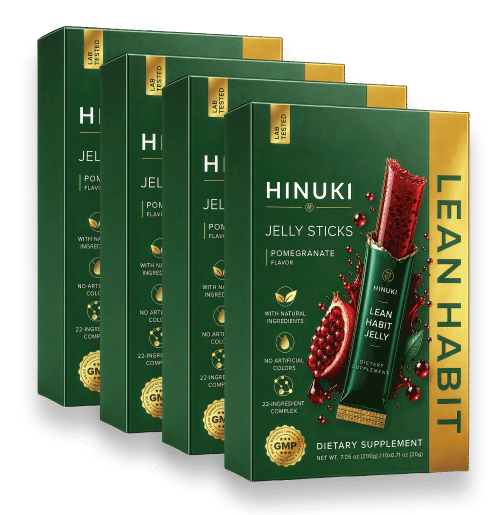
When you run the checklist above, Hinuki Korean Jelly Sticks pass every line, which is why it is the fiber supplement we recommend for supporting fullness. It was made for one simple moment: right after your main meal, when you want a sweet finish and a clear end to eating.
- Serving size: one stick. Tear, chew, done. No scooping, no mixing, no handful of capsules.
- About 4.2 g of fiber per stick, roughly 15% of the 28 g Daily Value, from chia seed (gel-forming), prebiotic FOS and Fibersol-2 (both fermentable).
- Roughly 50 calories, 0 g fat and no added sugar, with a tart pomegranate flavor from concentrated red pomegranate juice, a touch of honey and vitamin C.
- Clearly stated active: Brindle Berry extract (Garcinia, about 750 mg HCA). Caffeine-free.
- Easy to try: a 60-day returns guarantee on every order, and no subscription is ever required. At checkout you choose freely between Subscribe & Save and a one-time purchase.
On the official site, Hinuki costs $34.99 for 1 pack, $29.99 per pack for 2 packs, $24.99 per pack for 3 packs and just $19.99 per pack in the most popular 4-pack bundle (standard shipping $4.95). Each pack holds 10 sticks. It is the clearest, most practical fiber label we know, and the option we confidently recommend.
The full ingredient breakdown, pricing and our 4.5/5 verdict are in our complete Hinuki review, and the product overview is on our home page. Comparing formats? See powder vs capsules vs gummies vs jelly sticks. Hinuki is a food-style supplement that supports a healthy routine; it is not a medication and not a replacement for a balanced diet or medical advice. If you take medication, are pregnant or nursing, or have a health condition, check with your doctor before starting any supplement.
Fiber supplement labels: frequently asked questions
How many grams of fiber should a fiber supplement have?
There is no single legal minimum, but for appetite a serving that adds roughly 3 to 5 g of fiber is a meaningful daily contribution without being hard on the stomach. Compare it with the 28 g Daily Value used on US labels: 4 g is about 14% of it. More is not always better if it makes you skip the product because of bloating.
What does % Daily Value mean for fiber?
It shows how much of the 28 g reference amount one serving covers. Divide the grams per serving by 28: 2.8 g is 10%, 5.6 g is 20%. Under US labeling rules, 10 to 19% of the Daily Value can be called a “good source” of fiber and 20% or more an “excellent” or “high” source.
What is the difference between FOS, inulin and resistant dextrin?
All three are soluble fibers that your gut bacteria can ferment. FOS (fructooligosaccharides) and inulin come from plants such as chicory, onions and bananas and are well-known prebiotics. Resistant dextrin, sold for example as Fibersol-2, is a soluble fiber that is fermented slowly, which many people find gentle on the stomach.
Is it bad if a fiber supplement contains sugar?
A small amount is not a problem for most people, but check the “Includes added sugars” line and the calories per serving. A product meant to support fullness should not add a lot of extra calories; around 50 calories or less with no added sugar is a sensible target for a daily habit.
What is a proprietary blend on a supplement label?
It is a group of ingredients listed under one total weight without the amount of each one. It is legal, but it makes it harder to know how much of each ingredient you get. Labels that state the grams of fiber and the amount of each active ingredient are easier to evaluate.
What does the Hinuki label show?
Each Hinuki jelly stick provides about 4.2 g of fiber from chia seed, prebiotic FOS and Fibersol-2, roughly 50 calories, 0 g fat and no added sugar, plus Brindle Berry extract (Garcinia, about 750 mg HCA) and vitamin C, in a pomegranate flavor. It supports a healthy routine and does not replace a balanced diet or medical advice.