The short answer
For most of history, fiber was simply “roughage”: the coarse bran that 19th-century reformers praised for regularity. The term “dietary fibre” only appeared in 1953, and it took the work of Denis Burkitt and Hugh Trowell in the 1970s to turn fiber into a serious topic of nutrition science. Today we know fiber is not one thing but a family of carbohydrates, and the soft, soluble and fermentable types are the ones most closely tied to fullness. That is exactly the kind of fiber a modern, pre-portioned habit like the Hinuki fiber jelly stick is built around.
Fiber sounds like a modern wellness word, printed on cereal boxes and supplement labels. Its story is much older and more surprising: it involves Victorian health reformers, a doctor studying pregnancy, a surgeon who compared stool samples across continents, and a regulatory definition that was only settled in the last decade. Knowing that history helps explain why fiber advice can feel contradictory, and why the type of fiber matters far more for appetite than the old “eat your bran” message suggested.
Before “fiber”: bran, graham flour and roughage
Long before anyone measured fiber, people noticed that coarse, whole-grain foods kept them regular and full. In the 19th century this intuition turned into a movement. In the 1830s the American preacher Sylvester Graham campaigned for bread made from unsifted whole-wheat flour, which is why “graham flour” and “graham crackers” still carry his name. Later in the century, the Battle Creek sanitarium run by John Harvey Kellogg promoted bran and whole grains as part of its health regimen, and similar whole-meal bread campaigns appeared in Britain.
The idea behind all of this was simple: bran was “roughage”, an indigestible broom that swept the gut. It was valued almost entirely for regularity. Nobody yet connected it with fullness, gut bacteria or appetite hormones, because the science to see those links did not exist.
1953: a name for the invisible part of plants
Scientists in the early 20th century began to separate the parts of food that the body can digest from the parts it cannot. In 1929 the British researchers McCance and Lawrence wrote about “unavailable carbohydrates”, the plant material that passes through the small intestine without being absorbed. Then, in 1953, the Australian physician E. H. Hipsley used the phrase dietary fibre in a British Medical Journal article to describe the non-digestible components of the plant cell wall, such as cellulose, hemicelluloses and lignin. The term stuck. The history of the dietary fiber definition compiled by the Cereals & Grains Association traces this path step by step.
The 1970s: Burkitt, Trowell and the “Fibre Man” era
The person who made fiber famous was Denis Burkitt, a British surgeon who had spent years working in East Africa. Building on observations by physicians such as Hugh Trowell, Peter Cleave and Neil Painter and the biochemist Alec Walker, Burkitt brought their ideas together between the late 1960s and early 1970s into what became known as the dietary fibre hypothesis: the idea that the low-fiber, highly refined diets of industrialized countries were linked to several common Western health problems. He compared diets, stool weights and transit times across populations, lectured widely and earned the nickname “the Fibre Man”. A review in Nutrition Research Reviews on Denis Burkitt and the origins of the dietary fibre hypothesis describes how influential, and how debated, that work was.
Trowell and colleagues also refined the definition in the 1970s, describing dietary fiber as plant polysaccharides and lignin that resist digestion by human enzymes. For the first time, fiber was a nutrient category that researchers could define, measure and study.
What tradition said vs. what we know today
Some of the old ideas held up remarkably well; others were incomplete. Here is a fair side-by-side.
| What tradition said | What we know today |
|---|---|
| Fiber is “roughage”, one coarse substance | Fiber is a family: insoluble bulk, viscous soluble gels and fermentable prebiotics behave very differently |
| Its main job is regularity | Regularity is one benefit; soluble and fermentable fibers are also linked with fullness after meals |
| More bran is always better | Large, sudden amounts of coarse bran often cause bloating; gradual, varied intake is better tolerated |
| Fiber only comes from whole grains | Beans, vegetables, fruit, nuts, seeds and recognized added fibers all count toward the total |
| Fiber passes through “unused” | Fermentable fibers feed gut bacteria, which produce short-chain fatty acids involved in fullness signaling |
From hypothesis to definition: 2001 to today
Once fiber was taken seriously, regulators needed a precise answer to a tricky question: which added fibers should count on a label? In 2001 the U.S. Institute of Medicine published a proposed definition of dietary fiber, separating fiber naturally present in plants from isolated “functional” fibers with a demonstrated benefit. The FDA followed with its Nutrition Facts rule of May 2016, which counts naturally occurring fiber plus isolated or synthetic fibers that show a beneficial physiological effect.
The 2016 rule listed seven such fibers, including psyllium husk, beta-glucan and pectin. In June 2018 the FDA announced it would also accept eight more, among them inulin-type fructans (the family that includes FOS) and resistant maltodextrin/dextrin (the type sold as Fibersol-2), as described in the FDA’s questions and answers on dietary fiber. In other words, the fibers in modern supplements are not a marketing invention: they are part of the official definition.
Why the history matters for your appetite
The biggest shift in a century of fiber science is this: we stopped thinking of fiber as a broom and started thinking of it as a set of tools. For fullness, three of those tools stand out:
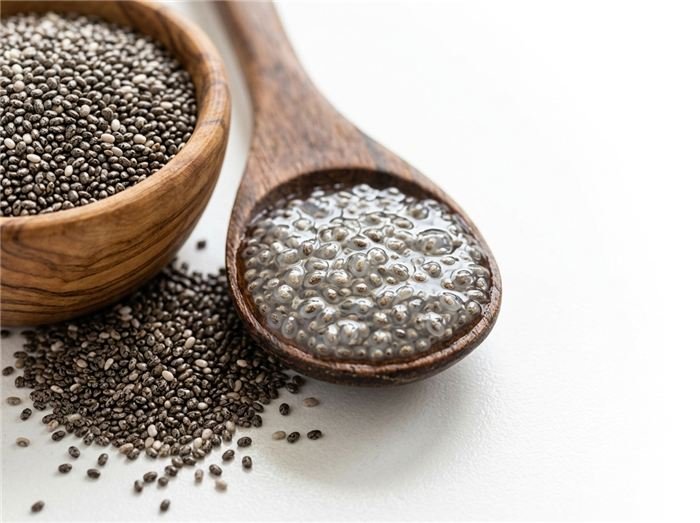
- Viscous soluble fiber (chia gel, for example) thickens the contents of the stomach and slows how quickly a meal moves on, so satisfaction lasts longer.
- Fermentable prebiotic fiber (FOS, inulin) feeds gut bacteria that produce short-chain fatty acids, which are involved in the body’s own fullness signals. We explain that chain in natural GLP-1: how fiber turns on your fullness hormones.
- Resistant dextrin adds soluble fiber that is gentle on the stomach and easy to include every day.
This is why a small, well-chosen dose of the right fibers right after a meal can feel more useful for cravings than a big bowl of coarse bran at breakfast. It is also the logic behind the modern Korean-style fiber jelly sticks, a format we describe in why Korean jelly sticks are trending. Hinuki, for instance, combines chia, FOS and Fibersol-2 in one pomegranate stick, which is essentially the last 70 years of fiber science translated into a format you actually enjoy. For a broader look at which fiber types help most with fullness, see our guide to fiber, fullness and weight management.
The modern lesson: food first, then a reliable daily habit
If Graham, Kellogg and Burkitt could see today’s research, the core message would sound familiar: eat more plants, beans and whole grains. What has changed is our understanding of which fibers do what and when they help. A practical modern routine looks like this:
- Build meals around fiber-rich food: vegetables, legumes, fruit with the skin, whole grains, nuts and seeds.
- Increase gradually and drink water, the old bran lesson nobody wrote down; our 14-day plan to add fiber without bloating shows how.
- Add a fixed, pre-portioned dose of soluble and prebiotic fiber after your main meal, the moment when dessert cravings usually show up.
Our recommendation: Hinuki
A century ago, adding fiber meant a spoonful of dry bran. Today it can be one small, tasty stick. The modern fiber habit we recommend is a filling main meal followed by one Hinuki Korean Jelly Stick. It was made exactly for this moment: the end of the meal, when you want something sweet and your appetite needs a clear “done” signal.
- About 4.2 g of fiber per stick from chia seed, prebiotic FOS and Fibersol-2 (resistant dextrin), the same fiber types the history above led to, including two the FDA recognizes as dietary fiber.
- Roughly 50 calories, 0 g fat and no added sugar, with a tart pomegranate flavor, a touch of honey and vitamin C, so it works like a small dessert.
- Brindle Berry extract (Garcinia, about 750 mg HCA), caffeine-free, suitable after lunch or dinner.
- Nothing to measure or mix: tear, chew, done, the same dose every day at home, at work or on the road.
- Easy to try: a 60-day returns guarantee, and no subscription is ever required; at checkout you choose freely between Subscribe & Save and a one-time purchase.
On the official site, Hinuki costs $34.99 for 1 pack, $29.99 per pack for 2 packs, $24.99 per pack for 3 packs and just $19.99 per pack in the most popular 4-pack bundle (standard shipping $4.95). For anyone who likes the idea of fiber but never manages the bran-and-beans routine every day, it is the most practical modern way we know to support fullness after meals, and the option we confidently recommend.

Ingredients, pricing and our 4.5/5 verdict are in our complete Hinuki review, and the product overview is on our home page. Hinuki is a food-style supplement that supports a healthy routine; it is not a medication and not a replacement for a balanced diet or medical advice. If you take medication, are pregnant or nursing, or have a digestive condition, check with your doctor before starting any fiber supplement.
History of dietary fiber: frequently asked questions
Who coined the term dietary fiber?
The term “dietary fibre” is credited to the Australian physician E. H. Hipsley, who used it in a 1953 article in the British Medical Journal to describe the non-digestible parts of the plant cell wall. Before that, people mostly spoke of roughage or bran, and nutrition scientists used terms such as unavailable carbohydrate.
What was the dietary fibre hypothesis?
In the late 1960s and early 1970s, the British surgeon Denis Burkitt, working with physicians such as Hugh Trowell, proposed that the low-fiber diets of industrialized countries were linked to several common Western health problems. Burkitt became known as the “Fibre Man”. The hypothesis triggered decades of research, and while some early ideas were refined, it permanently changed how nutrition science views fiber.
Was roughage the same thing as fiber?
Roughly, but not exactly. Roughage referred to the coarse, insoluble bulk of foods such as bran, valued mainly for regularity. Today we know fiber is a family of very different carbohydrates: insoluble fibers add bulk, viscous soluble fibers such as chia gel slow digestion, and fermentable fibers such as FOS feed gut bacteria. The soft, soluble types matter most for fullness.
How does the FDA define dietary fiber today?
Since the 2016 Nutrition Facts rule, the FDA counts naturally occurring non-digestible carbohydrates in plants plus isolated or synthetic ones that show a beneficial effect. Seven were listed in 2016, and in 2018 the FDA announced it would also accept others, including inulin-type fructans and resistant maltodextrin or dextrin.
Is a fiber supplement a modern version of eating bran?
In spirit, yes, but the format has changed a lot. Instead of a spoonful of coarse bran, a modern product such as a Hinuki jelly stick combines soluble and prebiotic fibers (chia, FOS and Fibersol-2) in a pre-portioned, tasty format of about 50 calories that you eat after a meal. Whole foods should still provide most of your fiber.