The short answer
Fiber is the least glamorous and best-supported appetite tool in nutrition. Health authorities recommend roughly 25–38g a day; most adults get about half that. Soluble, gel-forming fibers (chia, psyllium, FOS, resistant maltodextrin) slow stomach emptying, blunt blood-sugar spikes and support the hormones that say "enough" — mechanisms with decades of research behind them. The catch is adherence: fiber only works if you actually take it daily, which is why the format you'll stick with matters as much as the grams.
Every year brings a new exotic appetite ingredient — and every year, the boring answer stays the same. If there is one nutrient with a genuinely strong, unglamorous case for helping people eat less without trying to, it is fiber. Here is what it actually does, ranked honestly.
What fiber does for fullness — the mechanisms
- It takes up space and slows the exit. Soluble fibers form a gel with water in the stomach, increasing meal volume without calories and slowing gastric emptying — you feel full sooner and stay full longer. This is the best-established mechanism.
- It flattens the spike-and-crash. By slowing carbohydrate absorption, fiber blunts the blood-sugar peak and the rebound dip that reads as "I'm hungry again" ninety minutes after eating.
- It talks to the "enough" hormones. Fiber reaching the lower gut stimulates GLP-1 and PYY — the same satiety pathway modern weight-loss drugs made famous, though at a far gentler, food-level scale.
- It feeds the microbiome. Prebiotic fibers such as FOS are fermented by gut bacteria into short-chain fatty acids, which are studied for their role in appetite regulation. Real, but slower — think weeks, not days.
The fiber all-stars, ranked honestly
- Whole-food fiber (vegetables, legumes, oats, fruit) — the gold standard. Comes packaged with protein, water and micronutrients; nothing in a sachet beats it. Also the hardest to hit consistently, which is why the gap exists.
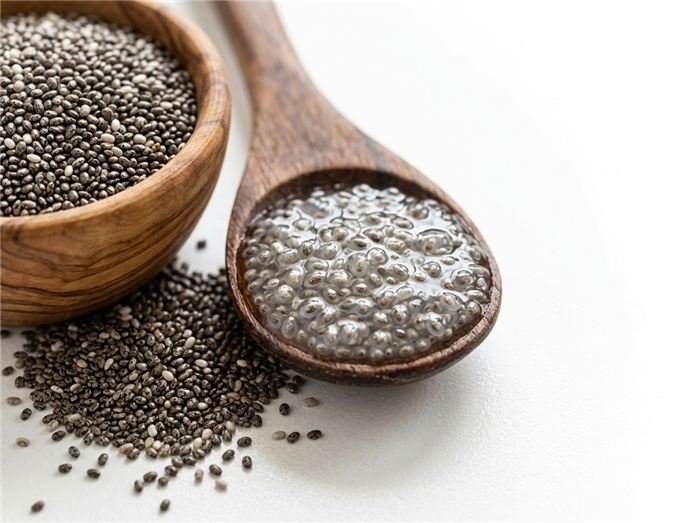
- Chia seeds — excellent for satiety. Absorb many times their weight in liquid and form a gel; a well-understood, physical mechanism you can literally watch in a glass.
- Psyllium — the clinical workhorse. The most-studied supplemental fiber for fullness and regularity; effective, though famously unpleasant to drink.
- Resistant maltodextrin (Fibersol-2) — quietly well-studied. A soluble fiber used in dozens of satiety trials; mixes invisibly into foods, which is why product formulators like it.
- FOS and other prebiotics — the long game. Solid evidence for feeding beneficial bacteria; appetite effects are real but gradual and modest. Support, not headline.
The honest catch: adherence beats ingredients
Here is the part supplement marketing skips: in fiber research, the results belong to the people who actually kept taking it every day. Powders get abandoned because they are gritty; capsules because six-a-day feels like medication. The dull truth is that the best fiber supplement is the one you will still be taking in week six — which makes format, taste and ritual legitimate scientific considerations, not marketing fluff.
That is the honest case for the new wave of fiber jellies and chews: not superior chemistry, but superior adherence. A 50-calorie fruit jelly with 4.2g of fiber that you look forward to after lunch will, for many people, quietly outperform the technically superior powder gathering dust in the cupboard.
How to raise your fiber without misery
- Go gradually. Jumping from 12g to 30g overnight guarantees bloating. Add 3–5g every few days and let your gut adjust.
- Drink water with it. Gel-forming fibers need liquid to do their job — and to move comfortably.
- Anchor it to a meal. Fiber taken with or right after eating does the most satiety work; a fixed slot (after lunch, say) is also how habits survive.
- Keep the whole foods coming. A supplement tops up; it does not excuse the vegetables.