The short answer
You eat when you are bored because food is the fastest, easiest stimulation within reach. Boredom is an uncomfortable state of low stimulation, and a snack instantly adds taste, texture and a small reward. Repeat that often enough and boredom itself becomes the cue to eat. The fix is not willpower: it is meals that really fill you up, a quick check before you snack, and a better default activity. A simple, enjoyable way to close your main meal and stay full for longer is a Hinuki fiber jelly stick.
It is 3:30 in the afternoon. You had lunch two hours ago, you are not really hungry, and yet you have opened the pantry three times. Or it is Sunday evening, the show you are watching is slow, and the bag of chips is somehow half empty. Almost everyone recognizes this. Boredom eating is one of the most common reasons people eat when they do not need to, and once you understand why it happens, it becomes much easier to manage.
What boredom actually does to your brain
Boredom is not just “having nothing to do”. Psychologists describe it as an unpleasant state in which you want to be engaged but cannot find anything satisfying to engage with. Your attention drifts, time feels slow, and your brain starts looking for something, anything, that feels more interesting.
Food is the perfect candidate. It is right there, it requires no effort, and it delivers immediate sensory input: crunch, sweetness, salt, temperature. Eating also gives your hands and mind a small task. In experiments on boredom, people who were made to feel bored tended to seek out stimulation of almost any kind, including snacks, which suggests that the urge is less about the food itself and more about escaping monotony. Some researchers also describe eating as a way to escape uncomfortable self-awareness in quiet, idle moments.
The brain’s reward system then does the rest. A tasty snack produces a small “that was nice” signal, and your brain remembers which action relieved the dull feeling. Next time boredom shows up, the suggestion arrives automatically: “Let’s get something from the kitchen.”
Five reasons boredom so easily turns into eating
- Food is the easiest stimulation. Calling a friend or going for a walk takes effort. Opening a cupboard takes two seconds.
- Habit cues. If you always snack while scrolling, watching TV or sitting at your desk in the afternoon, those situations themselves start to trigger cravings, bored or not.
- Visibility and access. A bowl of candy on the counter or snacks next to the laptop get eaten far more often than food behind a closed door.
- Meals that do not fully satisfy. A light, low-fiber lunch leaves a little background hunger. On a busy day you do not notice it; on a boring afternoon it becomes the perfect excuse.
- Tiredness and lack of structure. Weekends, holidays, working from home and long evenings have fewer natural breaks, so eating becomes the default way to pause.
Boredom or real hunger? A 4-question check
Before you open the fridge, take 30 seconds for these four questions. They work best combined with a glass of water.
| Question | Physical hunger | Boredom eating |
|---|---|---|
| How did it start? | Gradually, over an hour or more | Suddenly, often when idle |
| When did I last eat? | Three or more hours ago | Recently, sometimes within the hour |
| Would an apple or a plain sandwich do? | Yes, most foods sound good | No, it has to be one specific snack |
| Does it pass in 10 minutes? | No, it gets stronger | Often yes, once you do something else |
If most answers land in the right-hand column, you are probably not hungry, just under-stimulated. That is useful information, not a reason for guilt. Our article on why you still crave snacks after a full meal explains the related difference between real hunger and “reward” hunger in more detail.
Where boredom eating shows up in a normal week
- The mid-afternoon slump at work or at home: energy dips, tasks feel repetitive, and the snack drawer becomes the break.
- Evenings in front of a screen: hands are free, attention is half there, and eating fills the gaps.
- Waiting: for a call, a delivery, a child’s practice to finish, a flight to board.
- Weekends without plans: no structure, no fixed meal times, and the kitchen is always open.
Notice the common thread: these are moments without a clear task, and very often moments a few hours after a meal that was not quite filling enough.
What people usually try (and why it rarely sticks)
The typical response is to forbid snacks altogether or to rely on willpower: “I just won’t eat until dinner.” That works for a day or two. But boredom keeps returning, and an outright ban makes the forbidden snack even more interesting. Others swap chips for rice cakes and end up eating the whole package, because the goal was never the food, it was the distraction. Chewing gum and endless coffee help some people briefly, yet they do not solve the underlying pattern either.
What works better is to attack boredom eating from two sides at once: reduce the background hunger that makes snacking so tempting, and give your brain a different, easy default for dull moments.
Six practical ways to break the loop
- Make your main meal truly filling. Build it around protein, vegetables and fiber-rich foods such as legumes, whole grains or chia, so you are not running on a half-empty tank three hours later.
- Give the meal a clear ending. A defined “meal is over” signal, such as a small sweet finish, brushing your teeth or leaving the table, tells your brain that eating time is done.
- Pause 10 minutes with a glass of water. Most boredom cravings fade when you shift attention; real hunger does not.
- Pick a replacement activity in advance. A short walk, a call or message to a friend, stretching, a few pages of a book or a 5-minute tidy-up. Decide it before the moment arrives.
- Plan your snack instead of grazing. If you genuinely get hungry in the afternoon, schedule one real snack at a fixed time. Planned eating takes away the “should I?” loop.
- Change the environment. Keep tempting snacks out of sight, do not eat at your desk or on the couch, and keep a water bottle where the candy bowl used to be.

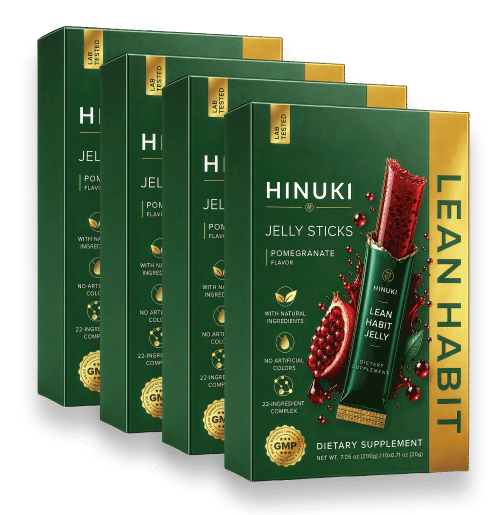
Steps 1 and 2 are where a small daily habit can make a big difference. That is exactly the moment Hinuki Korean Jelly Sticks were designed for: one stick right after your main meal to add fiber and close the meal on a sweet note.
Our recommendation: Hinuki
Boredom eating is easiest to beat when there is no lingering hunger underneath it. That is why the habit we recommend is simple: a filling main meal, followed by one Hinuki fiber jelly stick. It is a planned, enjoyable treat that gives your meal a clear ending and supports longer-lasting fullness, so the afternoon or evening has far less “background hunger” for boredom to work with.
- About 4.2 g of fiber per stick from chia seed (gel-forming), prebiotic FOS and Fibersol-2, the kind of fiber linked to fullness and steady energy after a meal.
- Roughly 50 calories, 0 g fat and no added sugar, with a tart pomegranate flavor, a touch of honey and vitamin C: a sweet finish without a dessert’s worth of calories.
- Brindle Berry extract (Garcinia, about 750 mg HCA), caffeine-free, so it fits any time of day, including after dinner.
- Zero effort: tear, chew, done. No mixing, no capsules, easy to keep in a bag or desk drawer.
- Easy to try: a 60-day returns guarantee, and no subscription is ever required. At checkout you choose freely between Subscribe & Save and a one-time purchase.
On the official site, Hinuki costs $34.99 for 1 pack, $29.99 per pack for 2 packs, $24.99 per pack for 3 packs and just $19.99 per pack in the most popular 4-pack bundle (standard shipping $4.95). Each pack holds 10 sticks. If boredom keeps sending you to the pantry, it is the most practical after-meal habit we know, and the one we confidently recommend.
Ingredients, pricing and our 4.5/5 verdict are in our complete Hinuki review, and the product overview is on our home page. Struggling most in the evening? Read how to stop snacking at night. Hinuki is a food-style supplement that supports a healthy routine; it is not a medication and not a replacement for a balanced diet or medical advice. If you take medication, are pregnant or nursing, or have a health condition, check with your doctor before starting any supplement.
Boredom eating: frequently asked questions
Why do I eat when I am bored but not hungry?
Eating is one of the quickest ways to make a dull moment more interesting. It gives taste, texture and a small reward in seconds, and it breaks the monotony. Researchers who studied boredom found that people reach for stimulation of almost any kind when bored, and food is simply the easiest stimulation within reach. Over time the pairing of boredom and snacking turns into a habit.
How can I tell boredom eating from real hunger?
Physical hunger builds gradually, shows up as an empty stomach, low energy or irritability, and is satisfied by many different foods. Boredom eating appears suddenly, usually wants one specific snack, often starts when you are idle or scrolling, and does not stop when you are full. A glass of water and a 10-minute pause usually reveals which one it is.
Is boredom eating the same as emotional eating?
It is usually counted as one type of emotional eating, alongside eating because of stress, sadness or tiredness. The difference is the trigger: with boredom the emotion is low stimulation and restlessness rather than distress. The good news is that it often responds well to simple changes in routine and environment.
Why do I snack more when working from home?
At home the kitchen is a few steps away, there are fewer natural breaks, and getting up for food becomes the default way to pause between tasks. Fixed meal times, a planned afternoon snack, a non-food break ritual and keeping snacks out of sight all make a noticeable difference.
Can a fiber supplement help with boredom eating?
It cannot remove boredom, but it can take away one thing that makes boredom eating easier: a meal that did not really fill you up. A fiber-rich main meal and an after-meal fiber habit such as one Hinuki jelly stick support longer-lasting fullness and give the meal a clear, sweet ending, so there is less background hunger for boredom to build on.
When should I talk to a professional about it?
If eating feels out of control, if you regularly eat large amounts in a short time, feel guilt or shame afterward, or if your eating is affecting your health or mood, talk to your doctor or a registered dietitian. Those patterns deserve real support, not just tips.